


PBTs have two essential elements that a barcode tag does not:
- The ability to read at a distance and out of line of sight using RFID
- A simple four-character unique identifier easy to remember and confirm
These are the different ways to more quickly locate a single bag to offload:
- Loading inventory
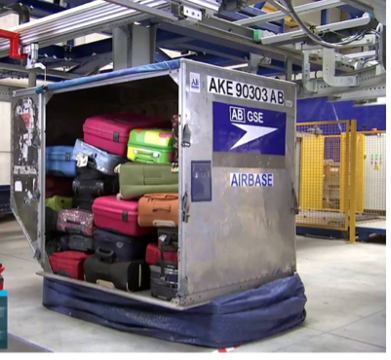
Hong Kong Airport tracks bags as they are loaded into ULDs (containers) and onto carts reading the BID (Baggage ID of a PBT) or LPN (License Plate or tag number) using a fixed RFID reader in the ceiling above each loading position. This way they know exactly which bags are in which ULD and the order in which they were loaded. If the bag to be offloaded was the 24th bag loaded out of a total of 32 it is easy to know that the bag is near the top of the bags in the ULD.
Delta uses RFID readers mounted under the conveyor of belt loaders and, like HKG, track every bag loaded and in which aircraft hold – forward 1 or 2, aft 3 or 4.

- Last four characters
Each PBT has a unique ten-character BID or Baggage ID. – with over a trillion codes there are NO duplicates. The last four characters are printed in a large font because the chances of a duplicate of last four characters is less than one in five million. Four characters are far easier to spot and remember than a ten-digit tag number.
Live RFID directional scanning – also known as Geiger Counter
There are handheld RFID scanners which can locate a single bag based on directional signals using arrows or audible signals.
See more: OFFLOADING BAGGAGE VIDEO
How the Locating System Works
- Target Input: You enter the BID or LPN of the bag you are looking for.
- Signal Meter: A dynamic graphical bar on the screen tracks real-time proximity and signal strength (RSSI).
- Audio Cues: The device emits a ticking or beeping sound that mimics a radiation counter, accelerating as reception improves.
There are two types of readers:
All-in-One
These include the reader and a screen and speaker to provide both audio and visual directions. Prices for the reader range from USD $750 basic model to $4,500 for a ultra-rugged reader with a range up to 20 metres and more precise location finding.
“Sled” reader paired with a Smart Phone (Android or Apple)
These readers are less expensive and include a clip-on mount to hold a Smart Phone which connects via Bluetooth. The reader harvests the signals and passes this to the Smart Phone which displays the visual and/or audio directions to the PBT.
Prices, for the reader only, range from USD $750 to $1,500. Smart Phone is separate.
- Baggage picture stored with BID
In the early phase of PBT adoption most PBTs will be in a hangtag format. These will gradually be replaced by PBT plates embedded into luggage at the factory. The plan is for the unique BID for each new bag will be linked to a picture of that specific bag model; colour, size, brand. These images will be available to airline ramp workers so, in addition to the information above, the ramp agent will know exactly what to look for making searches for bags to be offloaded even faster.
