


With the arrival of PBTs, Permanent Baggage Tags, it is necessary to have a new system to identify baggage which is unique and with no possibility of a duplication. The new baggage tag numbering system is called BID – Baggage Identification codes. The BID is designed to replace the outdated single use LPN, or License Plate tag number.
The LPN or License Plate Number is a ten-digit baggage tag number
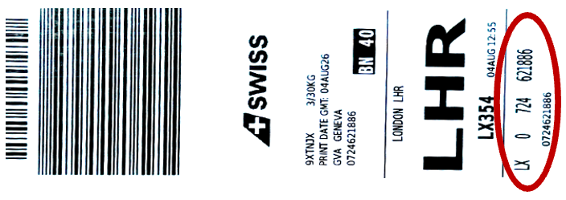
The first digit is used by airlines to specify types of baggage, for example 0 = online point to point, 1 = online transfer, 2 = interline transfer, 3 = priority baggage, etc.
The next three digits are the IATA Accounting code of the issuing airline. Example: 001 is the IATA Accounting code for American Airlines.
The remaining six digits are random serial numbers with 999,999 possible combinations.
The BID or Baggage ID is a ten-character permanent baggage tag number used by PBTs designed to replace the LPN and provide a unique code for every bag ever produced.
The last four characters of the BID are shown larger than the preceding six characters. This is because for a passenger four characters are easy to remember and the chance of a duplicate is more than one in five million. That’s MY bag!

Most current BHS – Baggage Handling Systems read the LPN to know the flight number, destination, etc. Future BHS can be programmed to read the BID or the LPN to identify baggage to know where to sort it to based on how the BHS has been programmed.
Within the new IATA BIX data sharing platform either the LPN or the BID can be used to access the information for that bag journey.
Eventually the BID can replace the LPN because of the risk of duplicate LPNs and because there will be zero duplicated BIDs.
